Roberto Infante
Cognitive computing · decision-making in humans and machines · humans as information systems
rdji@uw.edu · CV · GitHub · LinkedIn · Twitter
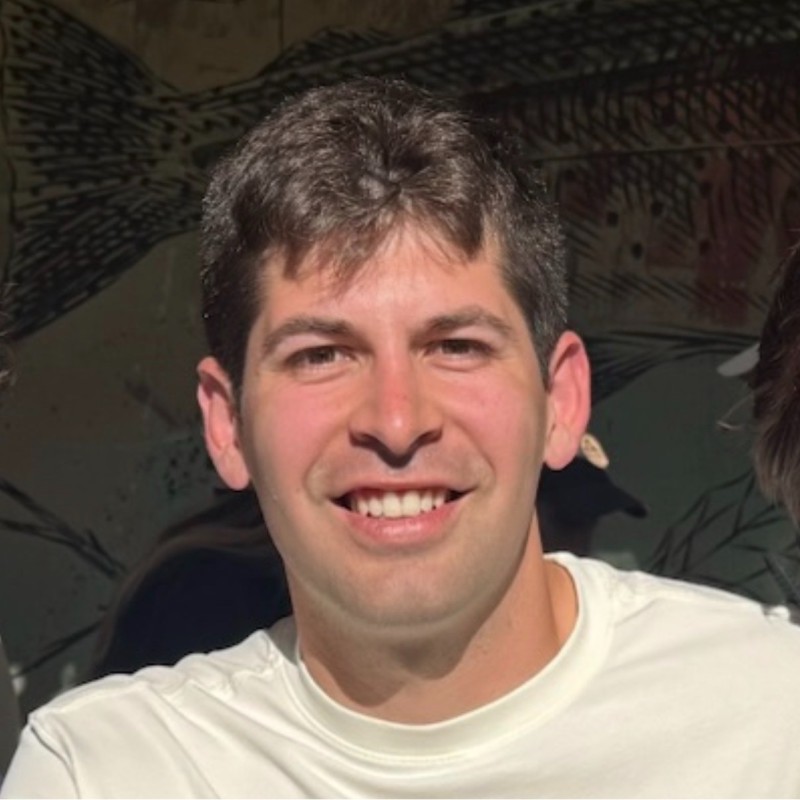
I study awareness of unawareness in human and machine reasoning, with a focus on recognition of insufficiency: how a reasoner recognizes that what it currently has may not be enough for the task, even before it can identify what is missing.
I am interested in what cues from ongoing reasoning support this recognition, whether it can occur before identification, and if it influences subsequent decisions about continuing to explore or acting.
I build controlled, species-fair tasks that go beyond final accuracy to compare how humans and language models monitor and regulate their reasoning.

Clusterwords is a controlled semantic reasoning task based on Connections, designed for species-fair comparison of human and machine reasoning. Humans and language models receive matched problems and controlled word meanings, allowing us to manipulate information sufficiency and answer uncertainty separately.
I am building an automatic board-generation pipeline to create novel, controlled problems at scale. Later experiments extend the task to sequential reasoning and information seeking.
Gentags: Discrete Semantic State for Constraint-Sensitive Decision Pipelines 2025 – 2026
First-author preprint introducing Gentags, a representation that compresses source text into short, evidence-grounded semantic units used as inspectable intermediate state in LLM decision pipelines. In a controlled study isolating representation structure, Gentags raised agreement with full-evidence decisions to 79.5% (vs. 52.3–61.6% for RAKE/YAKE/TF-IDF) and hard-constraint satisfaction to 97.3% (vs. 84.7–89.3%). [PDF]
Dynamic Information 2024
An LLM agent that builds and self-updates a knowledge/decision graph with an explicit hypothesis structure for Bayesian-style reasoning. Its limits motivated the shift to studying commitment under uncertainty directly.
Recommendation System & Smart Filters — UW MSIM Capstone (sponsor & lead) 2025 – 2026
Directed two capstone teams applying the Gentags approach to a live product, shipping a recommendation system and categorical/nudging filters now in production.
Previously I built and shipped data-driven products end to end as a technical founder. I am now moving into research in computational cognition.
-
Principal PM (Consultant) — Kerma Games — Monterrey, MX &
Boston, MA
Jun 2026 – Current
Lead the end-to-end product development and release of live casino games, launching a live Blackjack product for Rebet Casino that generated 250K dlls in turnover during its first week. Own the full live-gaming product ecosystem, spanning physical casino tables, cameras, sensors, card/deck tracking, video streaming, dealer controls, player-facing UX/UI, and correct game statistics. - Co-founder, Software Engineering — Voraa. Founder and sole developer of a B2B2C mobile app for Restaurant discounts subscription. Leading user experience data analysis and user interviews for experience enhancement.
- Python Engineer (freelance) — Saba. Migrated a public-opinion analytics platform from SPSS/R to Python with automated, real-time reporting.
- University of Washington. B.S. Information Sciences, Data Science. - M.S. Information Management, AI (on leave) ·
Reading
A shelf around cognition, computation, and decision-making. Drag the shelf; the laptop on the right holds the papers. Read and the next on the line.